 EldenRingInsight
I never thought a video game could make me feel such profound unease, but Elden Ring’s world has a way of sinking its melancholic claws into you. Back in 2026, as I reflect on my journey through the Lands Between, it’s not the golden vistas of the Erdtree that linger most vividly in my memory, but the places that whispered of despair, rot, and forgotten tragedies. The base game, in particular, wove a tapestry of dread that even its masterful expansion, Shadow of the Erdtree, with its own dark secrets like the oppressive Gaols and the ominous Abyssal Woods, couldn't quite replicate in sheer, suffocating bleakness. My journey wasn't just about becoming Elden Lord; it was about surviving the places that made me want to turn and run.
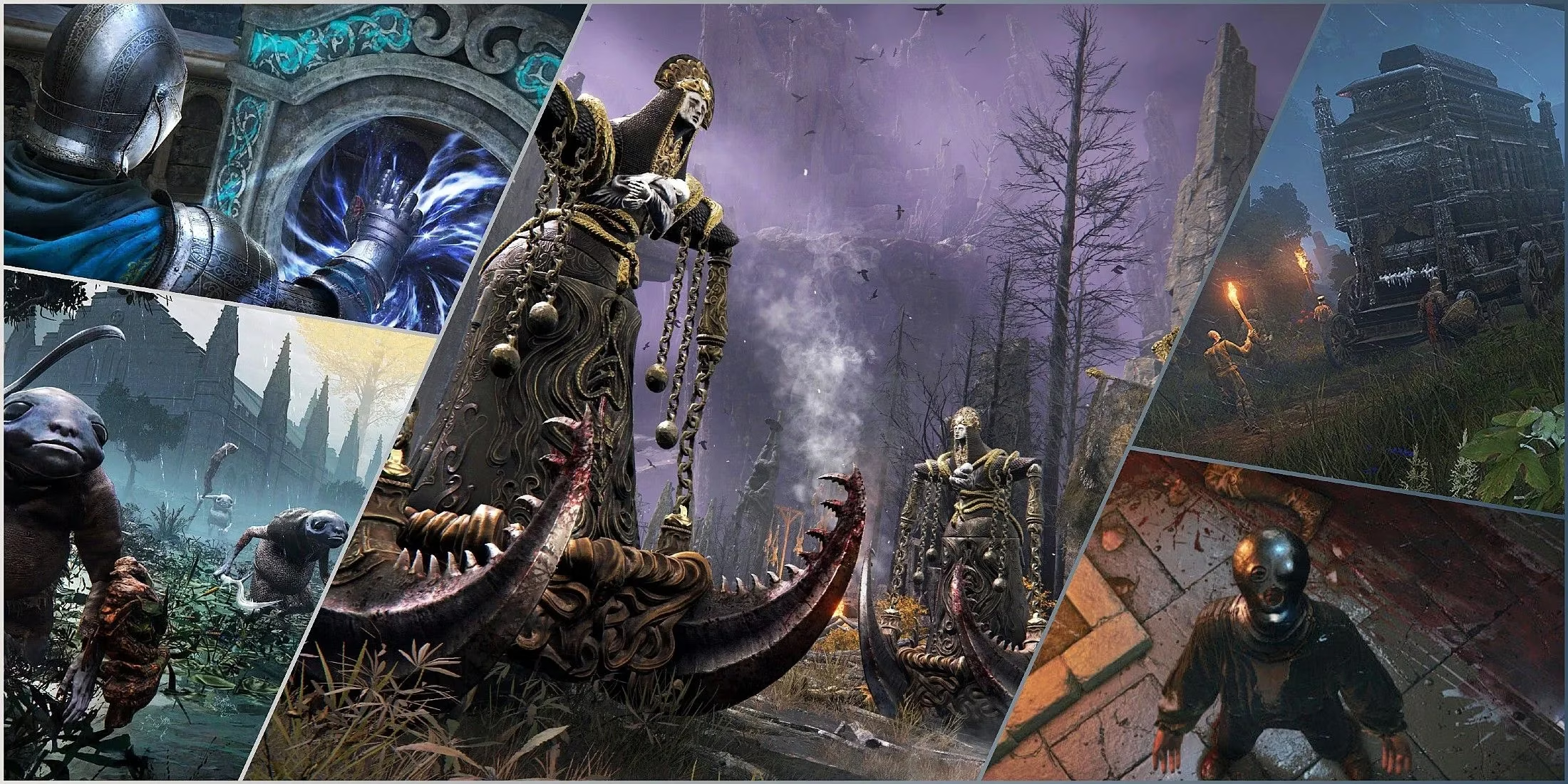
The first place that truly stole my breath—and not in a good way—was the Shaded Castle. From a distance, nestled between major regions, it almost looked inviting. That illusion shattered the moment I waded into the poisonous bog surrounding it. A thick, yellow haze of lethal fumes clung to its crumbling walls, a permanent shroud for this decaying stronghold. I remember the silence, broken only by the squelch of my boots in the murky swamp and the sudden, terrifying attacks from enemies wielding deathblight. Inside, the legacy of House Marais was written in rotting corpses and eerie, congealed sculptures. It was a beautiful, tragic trap, a mini-dungeon that felt less like a challenge and more like a punishment for my curiosity.
If the Shaded Castle was a poisonous trap, then the Subterranean Shunning-Grounds beneath Leyndell was a descent into madness. Navigating those sewers was a genuine nightmare. 😨
-
Twisted Paths: Tangled pipes, abrupt dead ends, and crumbling passages around every corner.
-
Horrific Sights: Entire floors carpeted so thickly with corpse remains that the actual ground was invisible.
-
The Forgotten: The imprisoned Omens, monstrous beings shunned and left to rot by the very Golden Order I was ostensibly serving.
This labyrinth was more than a dungeon; it was the physical manifestation of the city's darkest secrets, a dumping ground for its outcasts. The oppressive atmosphere was so thick I could almost taste the decay. Every shortcut felt like a minor victory against the overwhelming misery of the place.
Then there was the Village of the Albinaurics. Hidden in perpetual gloom beneath a vast plateau, the despair here was a palpable weight. This was a place of genocide, the ruins left by cursemongers who ravaged the home of these artificial beings. Slaying the few surviving, passive Albinaurics didn't feel heroic; it felt like a grim mercy. And at the center of it all loomed that horrific sight—a massive Hanged Man's Tree, its twisted branches draped with bodies. That image, reminiscent of the darkest tales, cast a shadow over my soul that I couldn't shake for hours.
| Location | Primary Source of Dread | Lingering Memory |
|---|---|---|
| Shaded Castle | Poisonous Environment, Deathblight | The yellow haze and silent corpses |
| Subterranean Shunning-Grounds | Claustrophobic Labyrinth, Hidden Horrors | The floor made entirely of corpses |
| Village of the Albinaurics | Genocide & Oppression | The Hanged Man's Tree |
But nothing, and I mean nothing, prepared me for Caelid. Calling it a region feels inadequate; it's a state of being. Picking just one spot here is impossible because the entire area is pure, unadulterated torment. The blood-red sky, the eerie, dissonant music, the very soil groaning with Scarlet Rot—it was Elden Ring's version of hell, and the title was earned. This twisted wasteland, born from the stalemate between Malenia and Radahn, made every step a trial. Whether I was at the Church of the Plague, Redmane Castle, or wading through the Swamp of Aeonia, I was constantly on edge, assaulted by grotesque, mutated beasts. It was gruesome, miserable, and utterly brilliant in its execution of dread.
For a moment of concentrated horror, however, the Corpse-Stench Shack at the foot of Mt. Gelmir was uniquely revolting. The shack itself was incidental; the surrounding battlefield was the true nightmare. The air reeked of burning corpses from a recent battle, a stench the game somehow made me imagine. Troll corpses were strewn about, lesser creatures impaled on stakes, and stray dogs scavenged the carnage. It was a snapshot of pure, grisly aftermath, hinting at a massive, failed siege on Volcano Manor. I fought lingering soldiers there, but the real enemy was the overwhelming sense of death and futility.
Yet, the crown for the most psychologically disturbing location must go to the Forsaken Depths within the Shunning-Grounds. This hidden abyss, leading to the Cathedral of the Forsaken, was where the world's despair crystallized into something actively malevolent. It was once a prison for the most despised, like the Nomadic Merchants who were sealed underground on false charges. Their despairing chant is what summoned the Frenzied Flame, embodied by the grotesque Three Fingers lurking here. Getting there was one of the toughest platforming challenges in the game—a terrifying descent into darkness. The visuals were disturbing, the music (if you could call the chants of isolated madmen music) was haunting, and the sheer sense of apocalyptic doom was overwhelming. Unless you sought the Lord of the Frenzied Flame ending, this was a place best avoided. It’s a memory that sticks, a dark pit in the world that reflects a dark pit of despair.
My journey through these places was more than a test of skill; it was an emotional odyssey. Elden Ring masterfully uses its environment to tell stories of betrayal, genocide, rot, and madness. These bleak locations aren't just backdrops; they are active participants in the narrative, shaping the Tarnished's path with whispers of sorrow and screams of frenzy. In 2026, as I look back, I realize that conquering these spaces of profound dread made the eventual glimpses of grace and victory feel all the more earned, and all the more precious.
Comments