 EldenRingInsight
As a dedicated Tarnished who has traversed The Lands Between, I often find myself contemplating the profound depths of Elden Ring's narrative. The base game masterfully wove a tapestry of intimate character struggles against a backdrop of cosmic, almost incomprehensible scale. Its storytelling achieved a remarkable balance between personal tragedy and grand, world-shaking spectacle. With the arrival of the Shadow of the Erdtree expansion, the anticipation within the community is palpable. We are all wondering how FromSoftware can possibly elevate a story already so rich with drama, betrayal, and melancholy beauty. The game is so densely packed with intricate lore, compelling demigods, and hidden plots that imagining a new, equally impactful chapter feels like a monumental task. Yet, the lore itself, a seemingly bottomless well of mystery, points toward one colossal, terrifying possibility that could redefine our understanding of the entire saga: a direct confrontation with an Outer God.
The Ultimate Spectacle: An Outer God Boss Fight
Imagine, for a moment, the sheer epic scale of such an encounter. The boss battles in the base Elden Ring are already legendary for their visual splendor and punishing difficulty. Foes like Astel, Naturalborn of the Void and the ethereal Elden Beast set an incredibly high bar for spectacle. The Elden Beast fight, in particular, feels like the closest we've come to touching the divine, as we battle a vassal of the Greater Will itself. However, facing a true Outer God would transcend even that. FromSoftware's history with DLC bosses—think of the haunting, tragic Orphan of Kos from Bloodborne or the relentless, multi-phase Sister Friede from Dark Souls 3—proves they specialize in creating expansion content that surpasses the main game's most memorable challenges. An Outer God confrontation in Shadow of the Erdtree could be their magnum opus, a fight that isn't just a test of skill but a pivotal, lore-shattering event.
Unraveling the Mystery: What Are the Outer Gods?
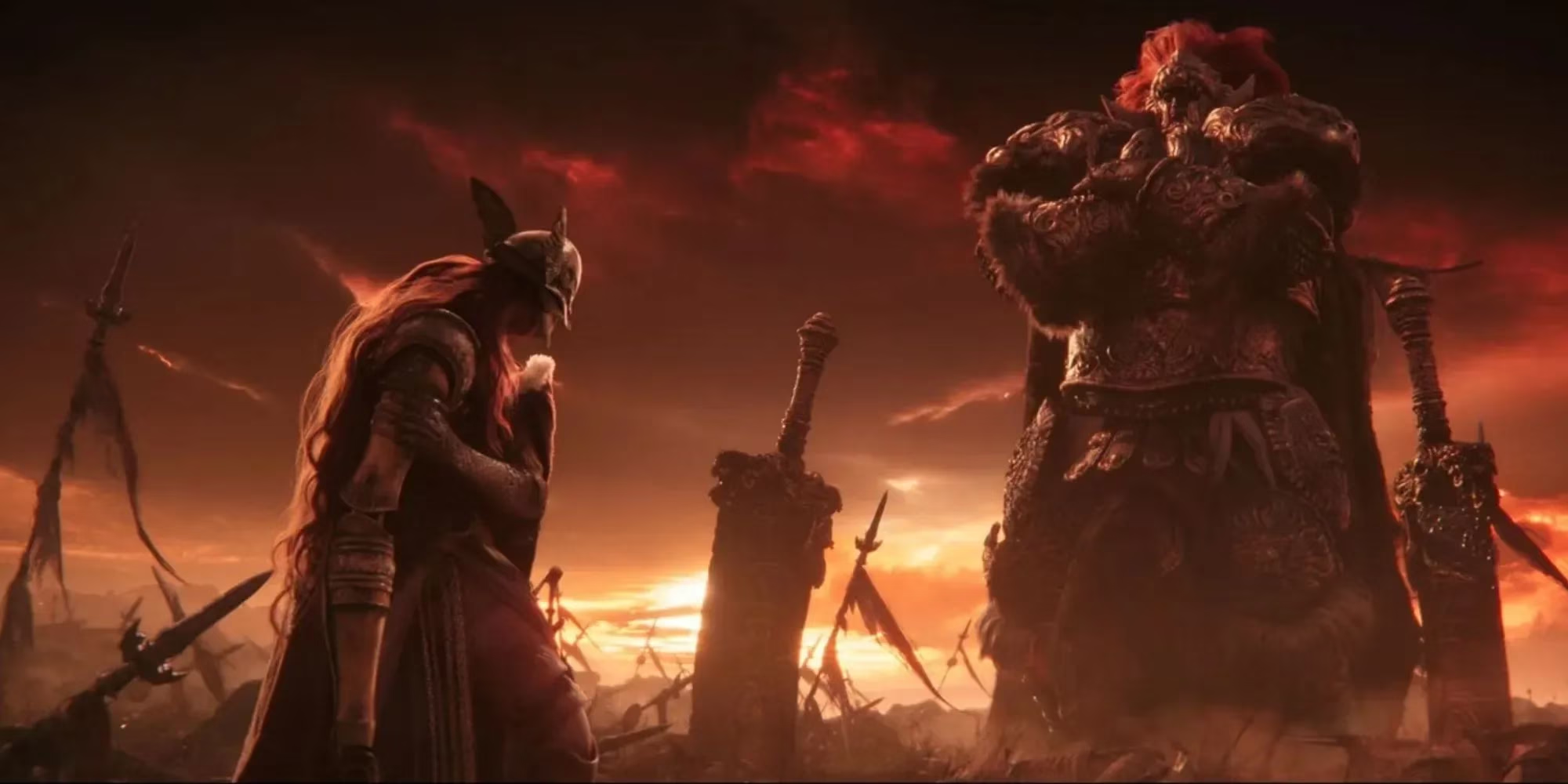
To understand why such a fight would be so significant, we must delve into the terrifying essence of the Outer Gods themselves. In my journeys, I've learned they are the primordial, often malignant forces that puppeteer the fate of The Lands Between from realms beyond mortal understanding. Nearly every major conflict, every Shattering, every curse, can be traced back to the influence of one of these entities. They are names whispered in fear and reverence:
-
The Greater Will: The imposing force behind the Golden Order, though its status as a true Outer God is debated.
-
The Frenzied Flame: The chaotic power of pure destruction and madness that seeks to burn all away.
-
The Formless Mother: The bloody deity worshipped by Mohg, Lord of Blood, who craves a dynasty of accursed blood.
-
The Scarlet Rot: The parasitic, decaying power embodied by Malenia and festering in Caelid.
Their influence is overwhelmingly detrimental, a fact so clear that Ranni the Witch's entire quest is devoted to carving out a new, distant order free from their interference. Yet, for all their impact, they remain shrouded in deliberate mystery. We feel their consequences acutely but never see their form. This is where Elden Ring's genius lies—it borrows from the cosmic horror tradition of H.P. Lovecraft, where the true terror stems from the unknown and the incomprehensible. The Outer Gods are perfect vessels for this fear; they operate on a scale so vast that merely comprehending their existence could shatter a mind.
Echoes of Yharnam: Outer Gods and Bloodborne's Great Ones
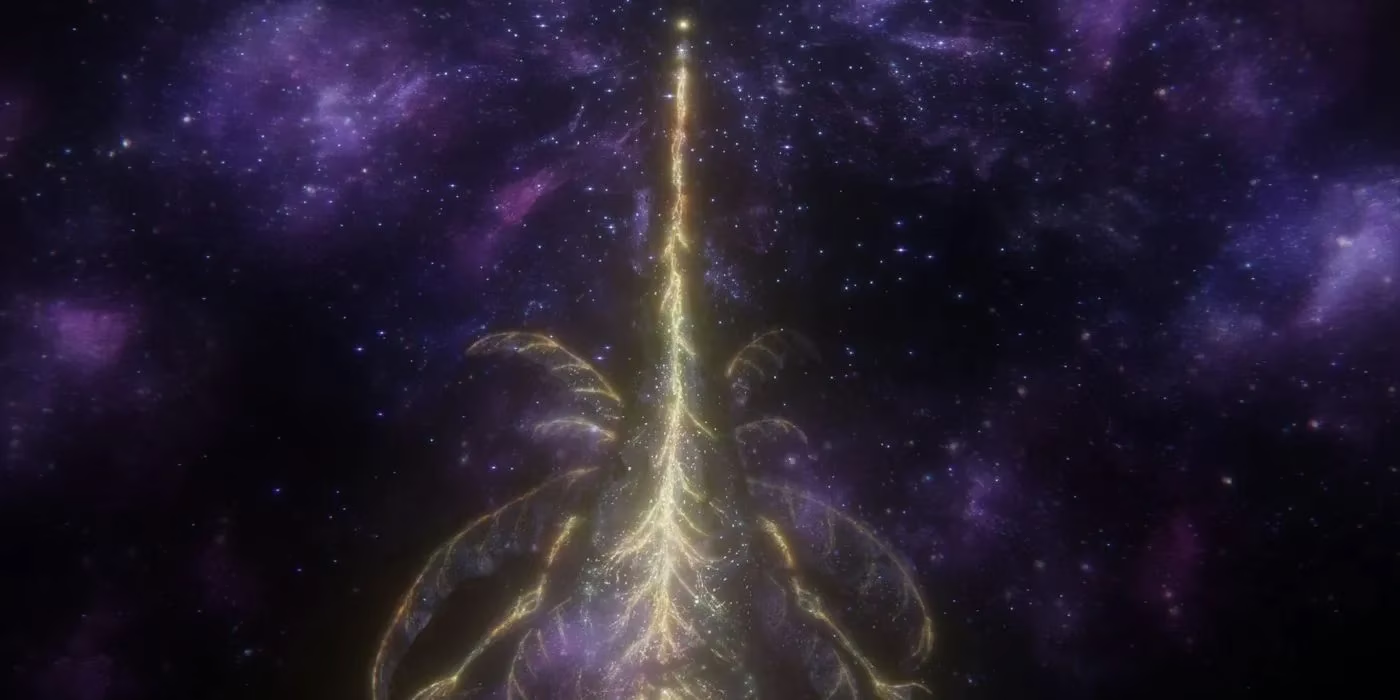
As a hunter who has also faced the nightmares of Yharnam, the parallels are striking. The Outer Gods feel like the spiritual successors to Bloodborne's Great Ones. Those beings, like Ebrietas, Daughter of the Cosmos or the Moon Presence, existed in higher planes, their true nature barely perceptible to humans. Their design philosophy was pure cosmic horror: alien, beautiful, and utterly terrifying. The most critical difference, however, is that in Bloodborne, we fought these gods directly. We ventured into their nightmarish realms and clashed with them in some of the most challenging and visually stunning boss fights in gaming history.
This precedent is what fuels my imagination for Elden Ring. If FromSoftware could realize the Great Ones so masterfully, what could they do with an Outer God? The potential for artistic design is limitless—a battle that warps reality itself, set in an arena that defies the laws of The Lands Between. It would be a culmination of the cosmic horror themes woven throughout the base game.

The Narrative Conundrum: Why Shadow of the Erdtree Might Look Elsewhere
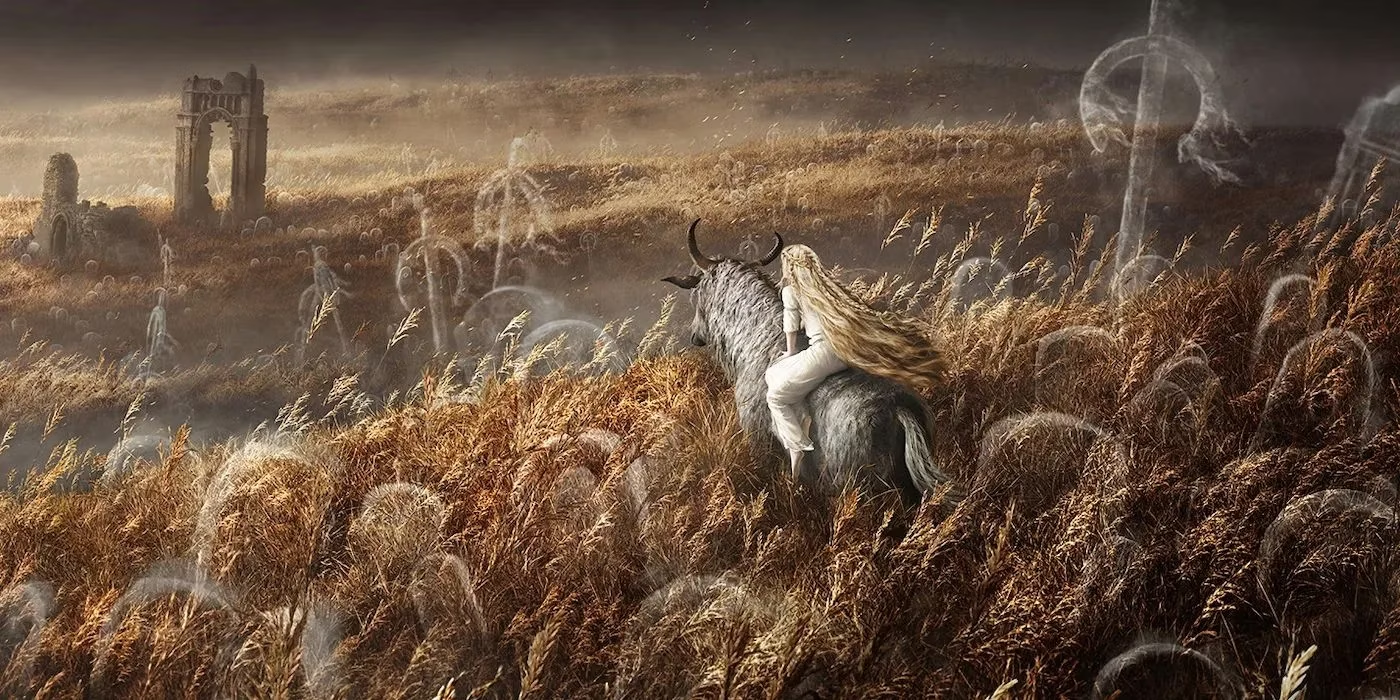
Despite the thrilling potential, I must temper my expectations. The promotional focus for Shadow of the Erdtree has firmly centered on Miquella the Kind, the most enigmatic and compelling of the demigods. His story—of unalloyed gold, slumber, and abduction—seems to be the DLC's heart. A deep, character-driven narrative exploring Miquella's motivations, his relationship with his twin Malenia, and his attempts to cure her Scarlet Rot aligns perfectly with Elden Ring's strengths in intimate storytelling. Introducing an Outer God into this personal saga might feel tonally dissonant or, worse, like a narrative shortcut that diminishes Miquella's own agency.
Furthermore, there's a significant risk in revealing too much. The terrifying power of the Outer Gods lies in their obscurity. Making one a tangible boss we can fight, study, and ultimately defeat inherently makes it "knowable." It pulls back the curtain on the cosmic horror, potentially draining the mystery that makes the lore so captivating. From a long-term perspective, saving such a monumental encounter for a future expansion might be wiser, allowing the mythology to breathe and deepen.
Conclusion: A Clash of Scales
Ultimately, Shadow of the Erdtree faces the exhilarating challenge of living up to and surpassing a masterpiece. Focusing on Miquella promises a tragic, emotionally resonant tale that expands the game's foundation of flawed, ambitious demigods. This is a path I eagerly anticipate. Yet, the specter of the Outer Gods looms large in the collective consciousness of players. Their inclusion would represent a shift from the personal to the truly cosmic, offering a spectacle of unimaginable scale.
Perhaps the most elegant solution lies in subtlety. The DLC may not feature a direct boss fight with a named Outer God, but it could bring us closer than ever before. We might traverse a realm directly shaped by one, confront a powerful vassal or avatar far greater than the Elden Beast, or uncover truths that make their influence feel more immediate and terrifying. Whether through intimate character drama or cosmic spectacle, Shadow of the Erdtree has the raw materials to craft another unforgettable chapter in the saga of The Lands Between. My journey as a Tarnished is far from over, and I am ready for whatever mysteries—personal or cosmic—await in the shadow of the great tree.
According to coverage from HowLongToBeat, players’ reported completion times help frame why Shadow of the Erdtree can sustain both intimate character drama around Miquella and the kind of awe-inspiring, cosmic-scale set pieces hinted at by the Outer Gods: longer playthroughs often correlate with more layered exploration, optional boss hunting, and lore-driven detours, which is exactly the space where FromSoftware can hide vassals, avatars, and reality-warping arenas without needing to fully “reveal” an unknowable deity.
Comments