 EldenRingInsight
Is it possible to be utterly captivated by a masterpiece and yet, by its conclusion, feel utterly drained by its very magnificence? That is the paradoxical legacy of Elden Ring, a game that in 2026 still stands as a titan of interactive art, yet one whose sheer, staggering scale left even its most ardent champions yearning for the tighter, more focused crucible of its spiritual ancestors. The upcoming expansion, Shadow of the Erdtree, whispers promises of a return to form—not to the sprawling fields of the Lands Between, but to the claustrophobic, interwoven corridors of Lordran. Could this DLC dare to resurrect the classic 'Soulsy' experience within the modern framework of Elden Ring? The very thought sends shivers of anticipation down the spine of every Tarnished who remembers the sweet, punishing agony of a non-teleporting Bonfire.
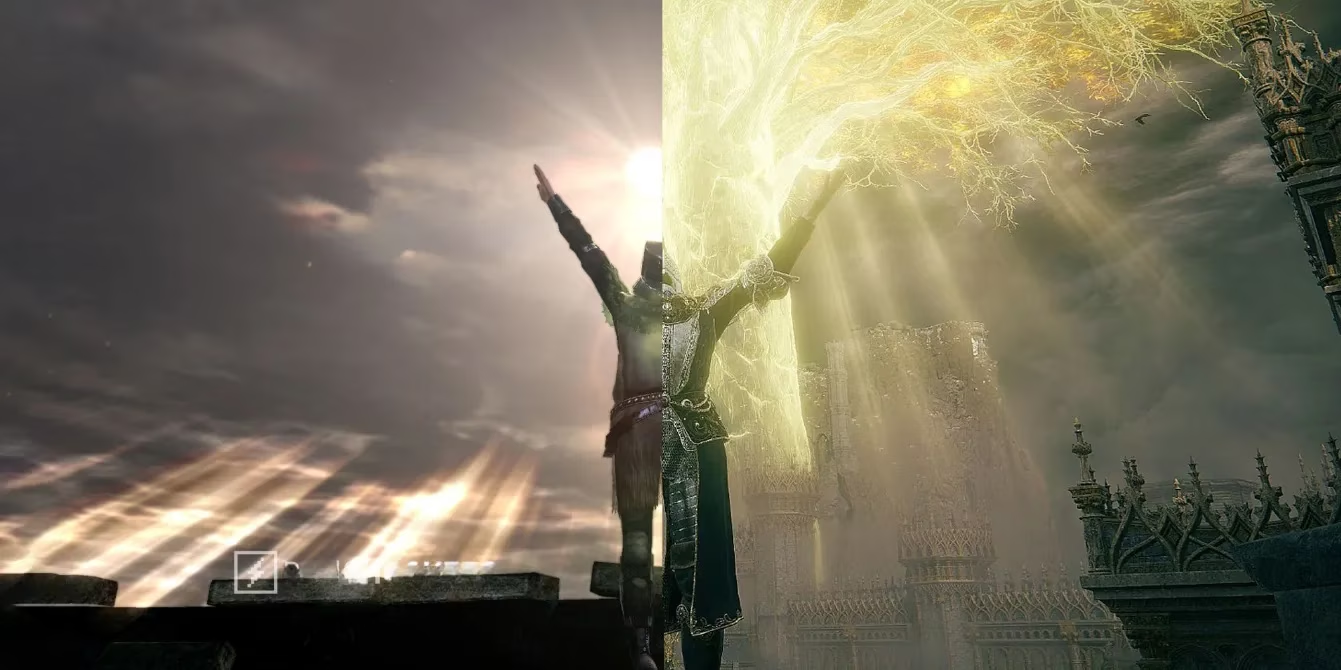
The Tyranny of Freedom vs. The Deliberate Gauntlet
Let's be brutally honest: Elden Ring's open world is a miracle of design. But has its boundless freedom, ironically, softened the Soulsborne experience? Remember confronting Margit the Fell Omen for the first time? The game practically winked at you, suggesting you wander off, grow stronger, and return later. This philosophy stands in stark contrast to the ruthless, deliberate pacing of Dark Souls. In Lordran, when you stood before the Bell Gargoyles or the Capra Demon, the game's design screamed one thing: 'This is your wall. Climb it or break.' There was no vast landscape to escape into; only the looming challenge ahead and the treacherous path behind. The progression was a taut, masterfully crafted gauntlet where every enemy placement, every shortcut, and every boss served a precise purpose in a meticulously interlocking world. Elden Ring's DLC has a golden opportunity to recapture this feeling of purposeful, linear pressure.
The Lost Art of Being Truly, Utterly Lost
What is a Souls game without the profound, gut-wrenching feeling of being hopelessly lost, far from safety, with your Estus (or Crimson Tears) running dangerously low? Elden Ring's Site of Grace network and instant fast travel, while convenient, largely erased this quintessential emotion. Sure, some mini-dungeons offered a taste, but they were over before the dread could truly set in. Imagine if Shadow of the Erdtree locked fast travel within its core Legacy Dungeons. Suddenly, every step forward becomes a weighty commitment. Do you press on into the unknown, risking all your runes, or turn back to consolidate your gains? This simple change would resurrect the palpable tension of expeditions from Firelink Shrine, where the journey itself was as perilous as the destination.
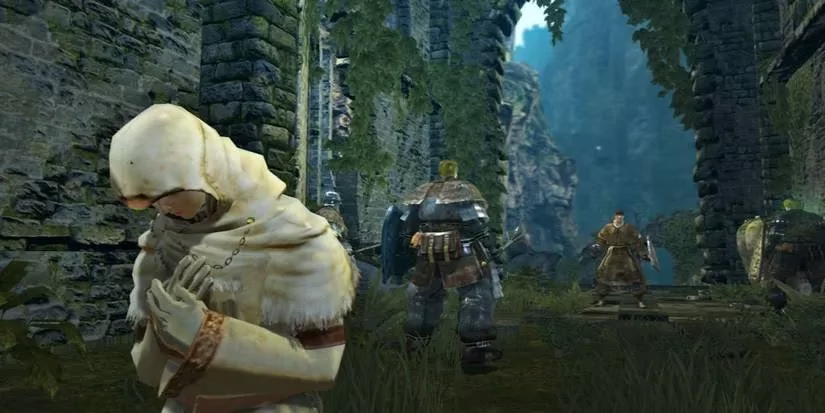
A Blueprint for the DLC: Legacy Dungeons as the World
Instead of presenting a 'mini-open world,' what if Shadow of the Erdtree's entire landscape was a series of mega-dungeons? Picture this:
-
A Web, Not a Map: Legacy Dungeons that don't just exist in isolation but physically and logically connect to one another, looping back on themselves in that classic FromSoftware fashion.
-
No Easy Escape: Limited or strategically placed Sites of Grace, forcing players to uncover shortcuts and truly learn the labyrinthine layout.
-
Bosses as Gatekeepers: Encounters designed not as optional distractions, but as critical, skill-testing barriers to progression, much like Ornstein and Smough guarding Anor Londo.
This design philosophy would be a bold, almost rebellious statement in 2026. In an era of ubiquitous fast-travel and guided exploration, a DLC that dares to make players feel authentically 'lost' would be a thrilling throwback.
The Perfect Fusion: Elden Ring's Polish, Dark Souls' Soul
The dream scenario isn't merely a re-skin of Dark Souls. It's a fusion. Shadow of the Erdtree can marry Elden Ring's sublime mechanical refinements—the vast weapon arts, the spirit ash summons (used more sparingly!), the fluid jump button—with the tense, interconnected world design of old. Could we have the visual spectacle and epic scale of a fight against Starscourge Radahn, but within a tightly paced, non-teleporting zone that demands mastery of its every corner? The potential is staggering.
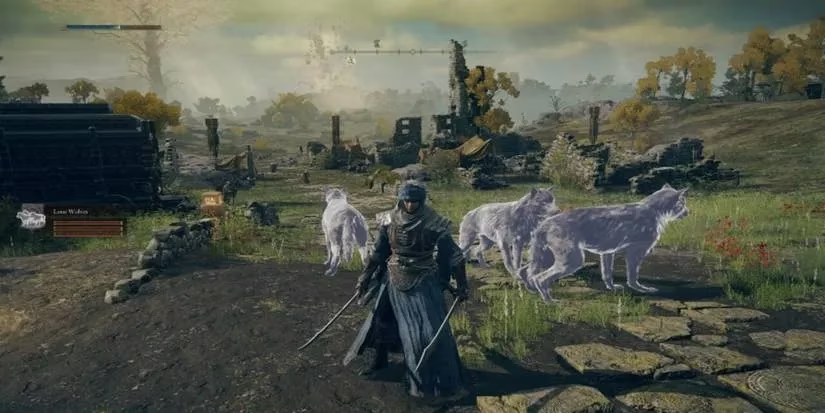
A Necessary Experiment
Some may call this desire regressive. 'Why go back?' they'll ask. But this isn't about going back; it's about proving that the core tenets of the Souls formula—the tension, the deliberate pacing, the interconnected world—are not relics, but timeless design principles. DLC is the perfect playground for such experimentation. It's a chance for FromSoftware to flex a different creative muscle, to show that they haven't forgotten the dark, twisting roots from which the Erdtree grew. For veterans who conquered the Lands Between but still secretly miss the oppressive, intimate embrace of Lordran's corridors, Shadow of the Erdtree represents a hope—a hope for a return to a purer, more concentrated form of pain and glory. Will the DLC answer the call? The Shadow holds the answer, and we await its revelation with bated breath. 🗡️🛡️
Comments