 EldenRingInsight
It’s 2026, and open-world fatigue is a phrase that gets thrown around like confetti at a wedding. Yet, when a player boots up a Japanese-developed JRPG, that weariness often melts away like snow in a hot spring. There’s a certain je ne sais quoi—a blend of meticulous craftsmanship and bold experimentation—that makes these sprawling adventures hit different. While Western studios often chase scale for scale’s sake, Japanese developers have spent the last decade crafting worlds that feel intimate, dense, and alive. The journey through these lands isn’t just about ticking off map markers; it’s about the stories that unfold between them.
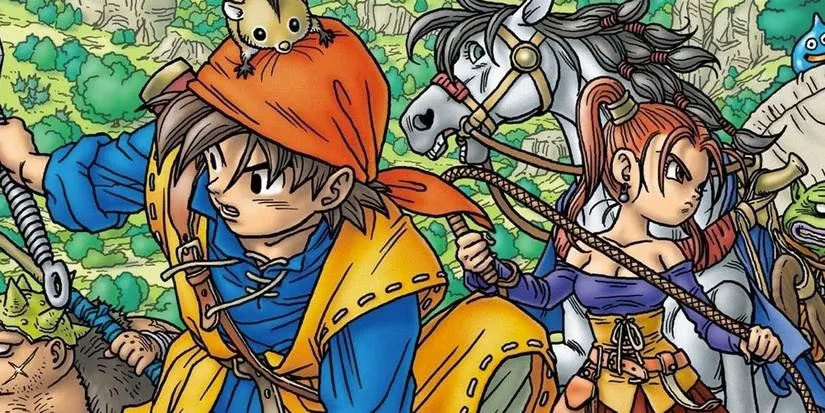
Take the case of an adventurer named Kaito. He’d cut his teeth on linear corridors and turned his nose up at the mere idea of spending another hundred hours wandering a lifeless map. That all changed when a friend pressed a controller into his hands and insisted he try Dragon Quest VIII. Now, to the uninitiated, DQ8 is practically a history lesson. Released way back in 2004, it was the first fully 3D entry in the series, and its approach to the overworld was a game-changer. Unlike the chibi-style, shrunken-down world maps of its predecessors, DQ8 presented a to-scale continent that made every trek from town to dungeon feel like a genuine pilgrimage. Kaito found himself pausing on a cliffside just to watch the sun dip below the horizon, the orchestral score swelling in the background. It was a masterclass in how scale could enhance storytelling, not just bloat the runtime.
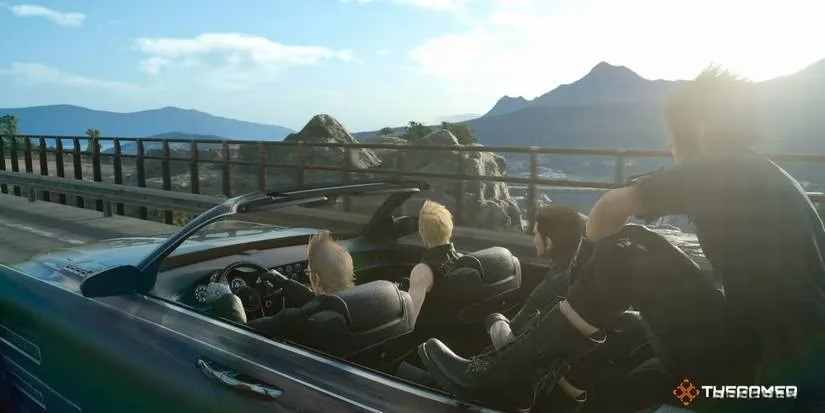
Fast forward a few console generations, and that same sense of grand journey found a new champion in Final Fantasy XV. The road trip with Noctis and his comrades became a lightning rod for criticism upon release, but by 2026, its reputation has aged like a fine wine. The magic wasn’t in the destination but in the in-between moments—the regalia breaking down on a dusty highway, the impromptu photo ops, the idle banter as the crew set up camp under a star-scattered sky. It was an open world that prioritised vibes over content density, and for those like Kaito, who had grown weary of checklists, it was a breath of fresh air.
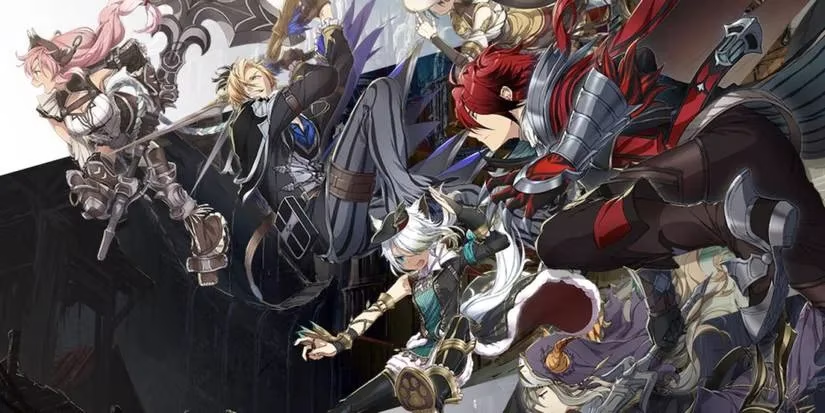
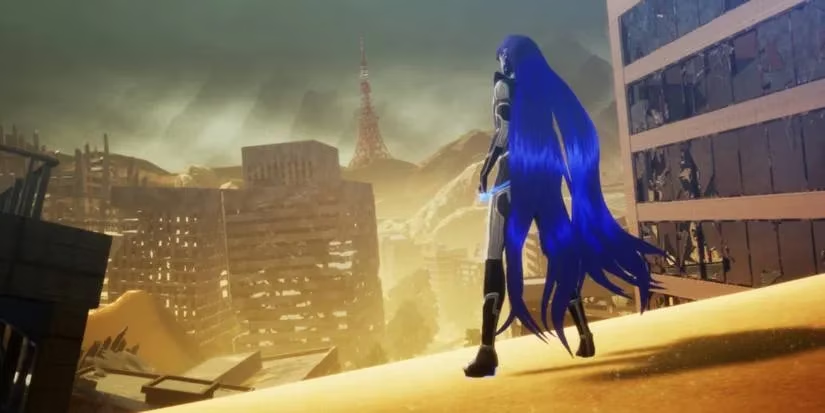
Not every Japanese open world needs to be a continent-spanning epic, though. Sometimes, a single city can hold more secrets than a dozen kingdoms. Ys IX: Monstrum Nox locked players within the towering walls of Balduq, a gothic prison-city brimming with verticality. Each member of the party had their own traversal gimmick—gliding, wall-running, you name it—turning exploration into a kinetic playground. It was a stark reminder that density trumps square mileage every time. Similarly, Shin Megami Tensei V threw players into a ruined, demon-infested Tokyo where the environment itself felt hostile. The semi-open zones were a far cry from the series’ traditional dungeon crawling, but they offered a deliciously tense freedom. Slinking past a towering demon you had no business fighting, only to circle back ten hours later to exact divine revenge? That’s the kind of emergent storytelling that makes open worlds sing.
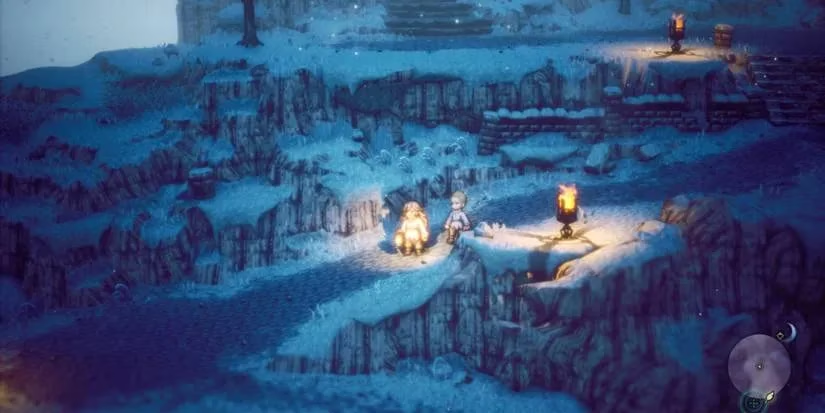
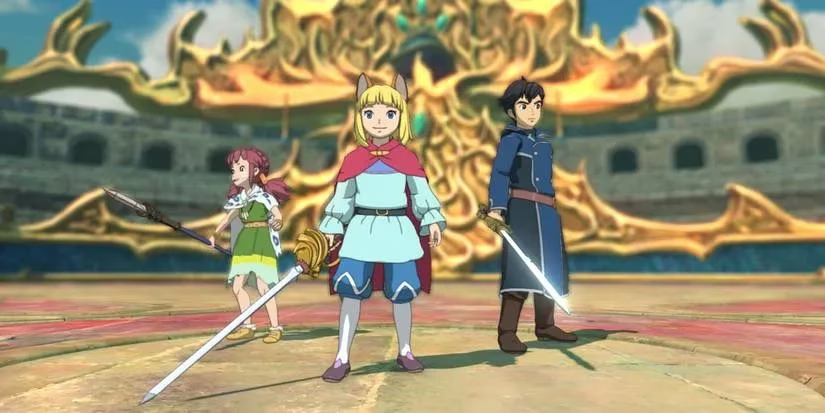
Then there are the games that wear their hearts on their sleeves, painting worlds in storybook hues. Octopath Traveler and its sequel brought the HD-2D aesthetic to the forefront, carving the land of Orsterra into interconnected zones that could be tackled in any order. The genius was in the character-specific path actions—recruiting townsfolk, duelling NPCs, or stealing precious loot—that encouraged revisiting every nook and cranny. Meanwhile, Ni no Kuni II blended its kingdom-building mechanics with a gorgeously realised overworld. Dashing across the chibi landscape as the young king Evan, Kaito felt like he was piloting a living diorama. The art direction was so charming that even the lowliest fetch quest felt like a page torn from a fairy tale.
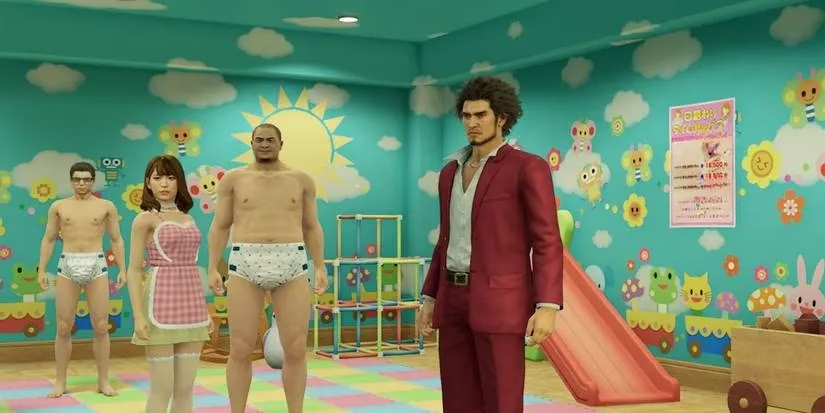
Of course, no conversation about Japanese open worlds in 2026 is complete without a tip of the hat to Yakuza: Like a Dragon. The series had always boasted dense, bustling districts, but the shift to a turn-based JRPG structure in the seventh mainline entry was a stroke of mad genius. Ichiban Kasuga, a die-hard Dragon Quest fanboy, sees the world through the lens of a hero’s journey. The streets of Yokohama transform into a vibrant grid of side quests, vocational jobs, and absurdly poignant encounters. It’s a game where you can suplex a grown man in a mascot costume, then weep over a bowl of ramen. The city breathes—every alleyway hums with life, and every NPC feels like they’ve got a story to tell.
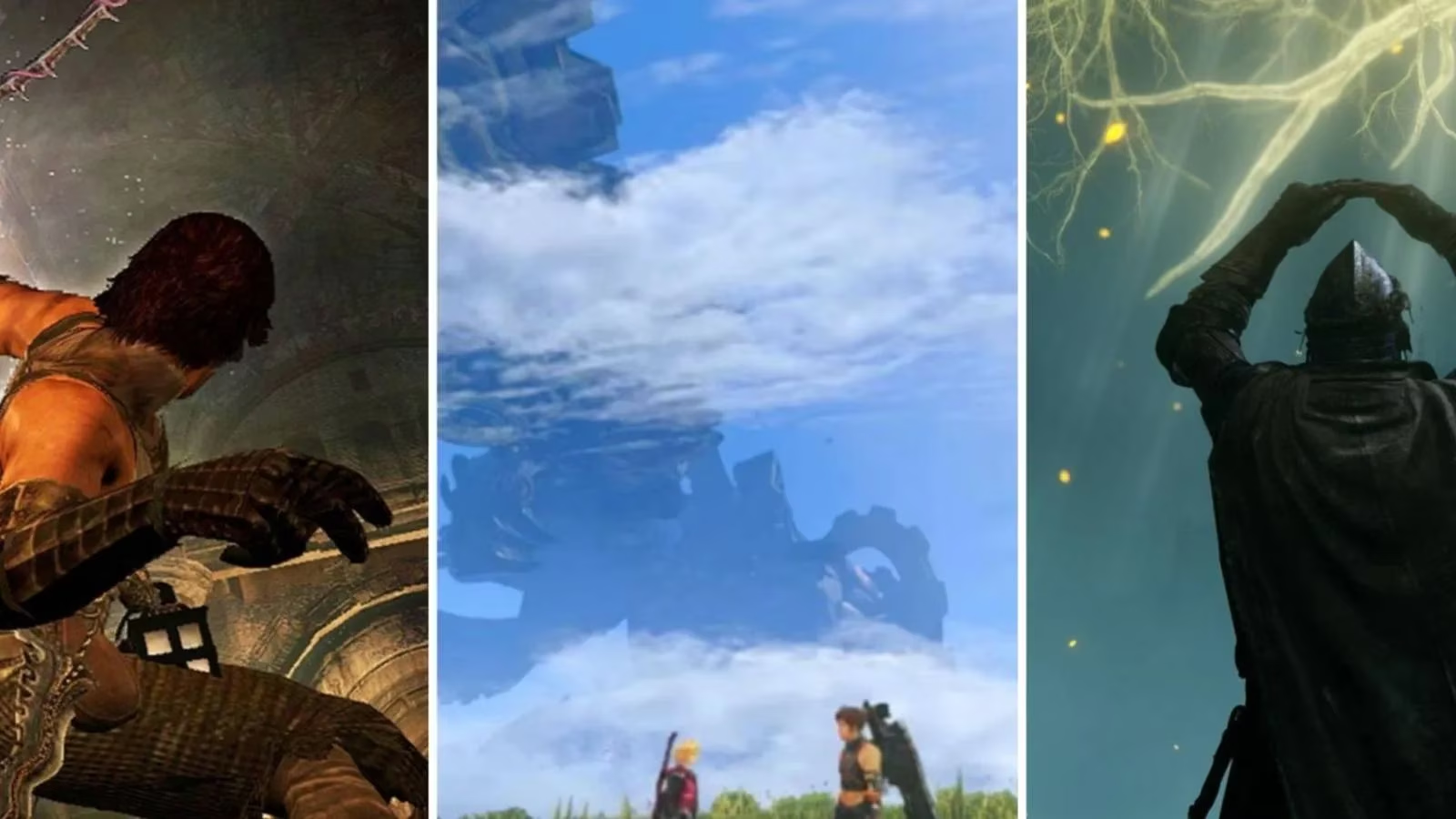
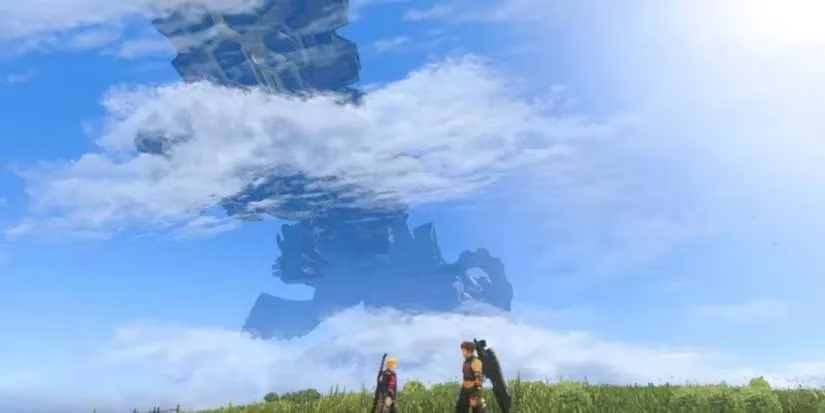
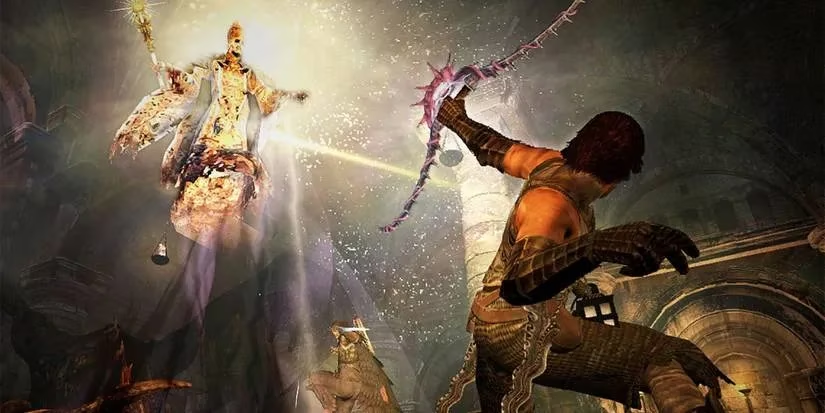
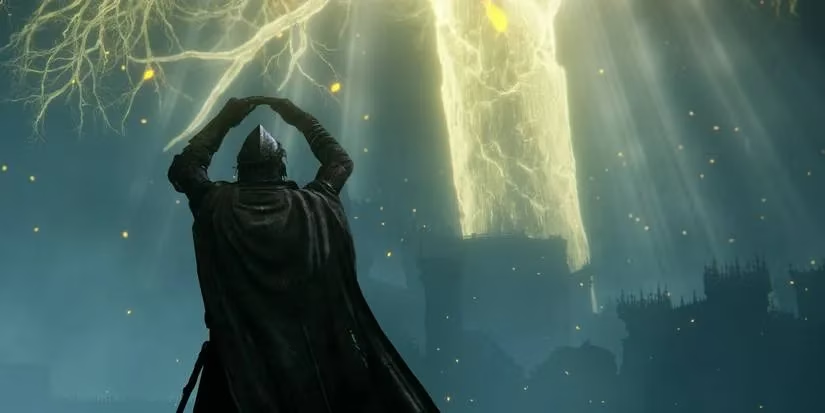
For those craving true, unbroken scale, the titans delivered in spades. Xenoblade Chronicles (the entire series, really) has always flirted with the concept of open zones so colossal they might as well be open worlds. Standing on the Bionis’ leg and gazing across at the Mechonis in the distance is a moment etched into gaming history. Monolith Soft’s knack for environmental storytelling turned every cliff edge and hidden cave into a narrative beat. Speaking of narrative, the team’s DNA bled directly into the behemoth that is Elden Ring. When FromSoftware decided to go open world, they didn’t just slap a Souls game onto a big map; they reinvented the language of discovery. Grace-given trails of golden light? Purely optional. That dragon in the lake? You’d better believe you can just gallop right past it. Elden Ring respects the player’s intelligence and curiosity in a way that even its own predecessors didn’t. And then, in 2024, Dragon’s Dogma 2 took the torch from its cult-classic predecessor and ran with it, proving that the pawn system and emergent monster encounters were always ahead of their time. The original Dragon’s Dogma remains a masterclass in density, where every corner of Gransys holds a snarling chimera or a hidden cyclops, and your AI companions never shut up about it in the best possible way.
As Kaito put down his controller in 2026, having bounced between these worlds for years, he realised the common thread. Each of these games, whether they traded in turn-based tactics or real-time action, understood that an open world is only as good as the stories it lets the player live. They shunned the Ubisoft formula in favour of something far more human: a journey through landscapes that felt crafted, not generated. In an era where “open world” had become a dirty word, these Japanese gems reminded everyone why they fell in love with the genre in the first place. The sun is still setting over Gransys, Yokohama, and the Lands Between—and in 2026, their glow hasn’t faded one bit. 🌇
Comments