 EldenRingInsight
By 2026, the landscape of The Lands Between has been thoroughly mapped by countless Tarnished, yet the climactic encounter against Radagon of the Golden Order and the Elden Beast remains a monumental hurdle. Reaching Elden Ring's endgame is a grueling journey in itself, a test of attrition that pushes even seasoned veterans to their limits. The sequence demands the player light the flame at the Forge of the Giants, navigate the crumbling ruins of Farum Azula, and silence Maliketh's black death. Upon returning to a capital consumed by ash, a relentless gauntlet awaits: the all-knowing Sir Gideon Ofnir and the spectral might of Godfrey, First Elden Lord. Only then does the golden fog part, revealing the game's true final gauntlet—a back-to-back spectacle of divine wrath and cosmic terror. The first form, Radagon, is a shattered vessel of aggressive melee and holy hammer slams, his every move resonating with a tragic, disciplined fury.
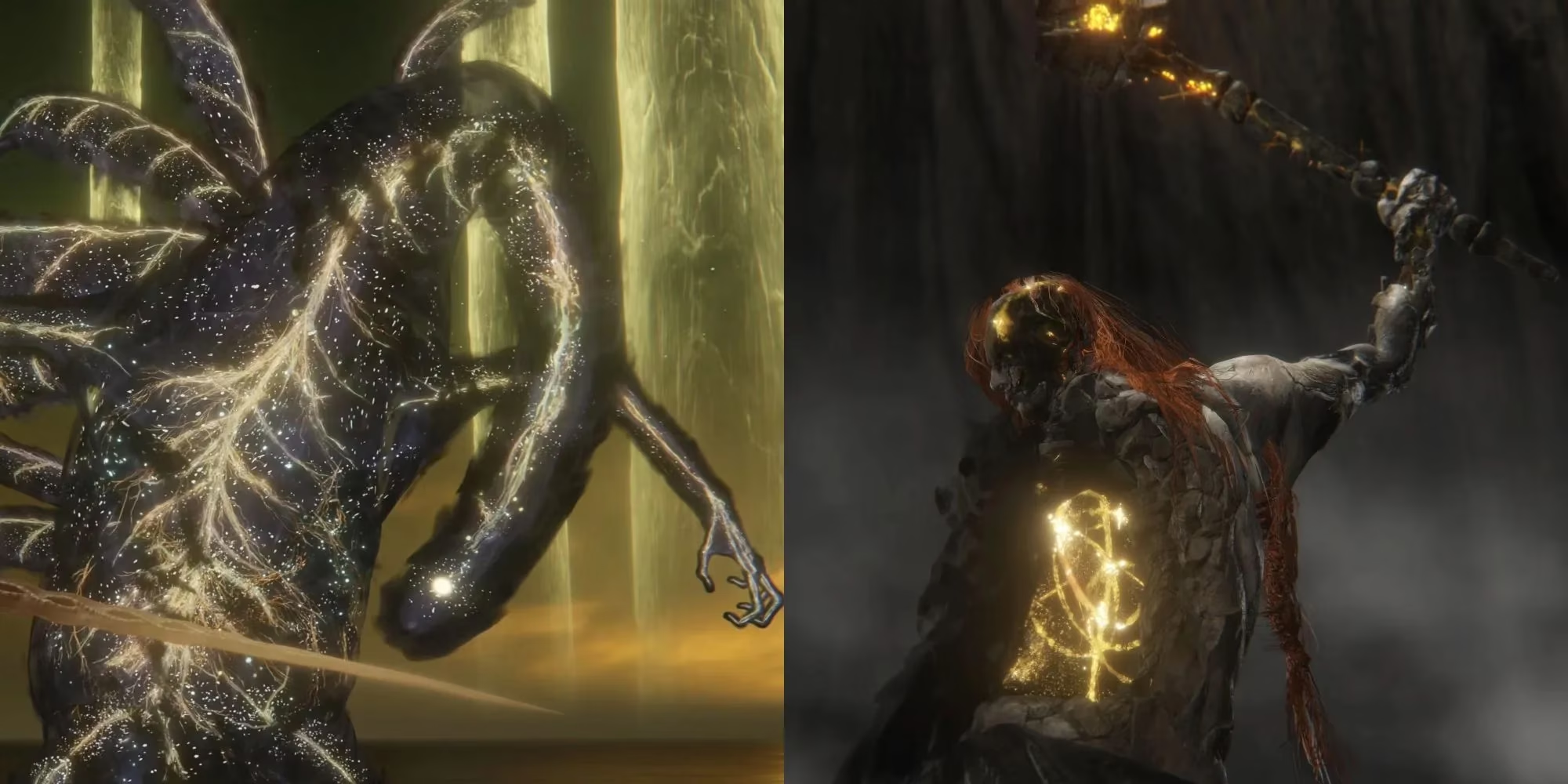
Once Radagon's red-haired frame collapses, the arena dissolves into a surreal, watery expanse, and the true horror awakens. The Elden Beast emerges as a colossal, serpentine avatar of the Greater Will, its fight a marathon of chasing a teleporting leviathan while dodging nebula-like explosions and cascading golden sword waves. This beast is typically a far more protracted battle, its immense health pool and evasive nature wearing down flasks and patience. However, within the community's collective wisdom, a profoundly simple strategy has long since transformed this apocalyptic duel into a manageable task. The secret weapon is not a colossal sword or a meteor-summoning staff, but a humble, early-game Incantation: Divine Fortification.
The Sanctified Shield: Acquiring and Understanding Divine Fortification
Found very early in the Weeping Peninsula, dropped by a shimmering Teardrop Scarab, Divine Fortification is the foundational bulwark against Elden Ring's most pervasive elemental threat. With a trivial requirement of merely 10 Faith and any basic Sacred Seal, its accessibility is almost universal. For a minuscule cost of 20 FP, and with the ability to be cast while on the move, this Incantation immediately raises one's Holy damage negation by a staggering 35%. This mathematical advantage effectively rewrites the damage profile of the game's final act. Holy damage is not merely an aesthetic choice for FromSoftware; it is a narrative thread woven into the very fabric of the Erdtree and its servants, making divine protection an absolute game-changer.
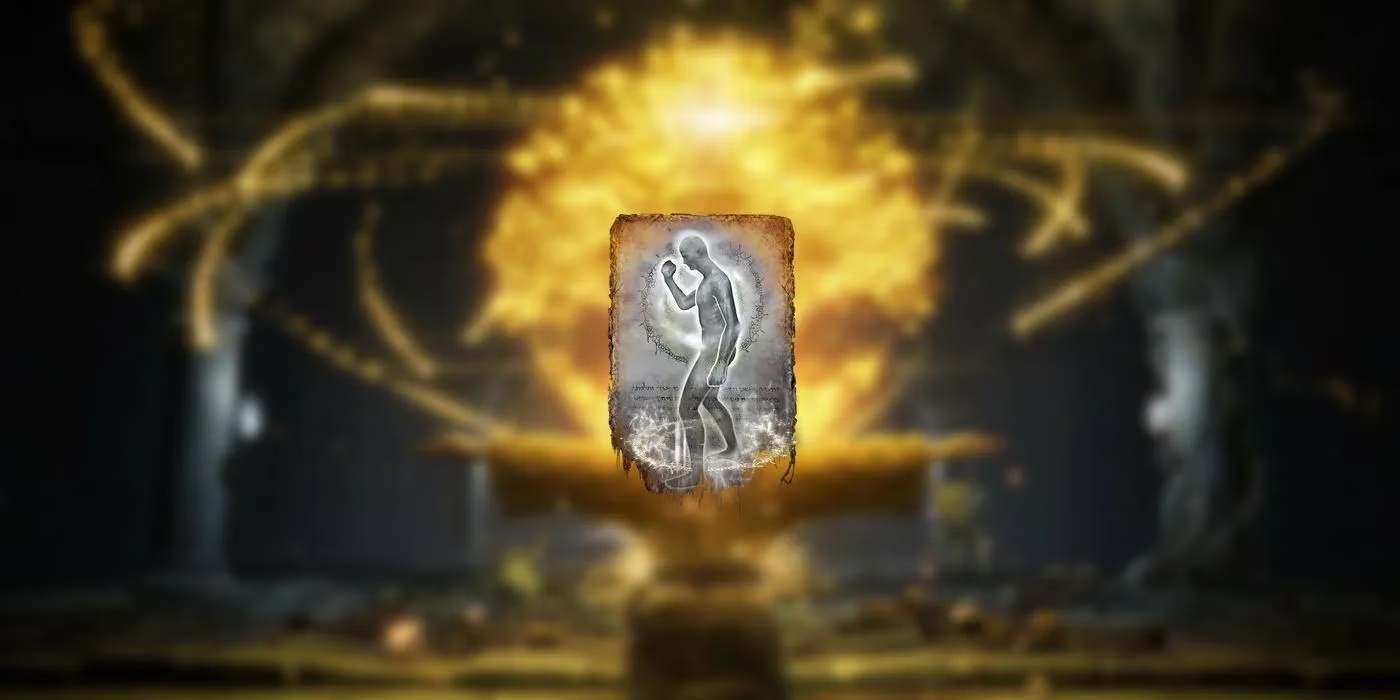
The incantation's low investment opens up build diversity unseen in other cheese strategies. A pure melee warrior can dip a single point into Faith, equip the Two Fingers Heirloom temporarily, and still benefit from this sacred shield. When applied against the Elden Beast, the transformation is stark. The boss’s signature attacks—the homing golden rain, the circular prison of expanding light rings, and the brutally efficient blade beams—become mere nuisances rather than life-ending catastrophes. A player can stand their ground, absorbing a full barrage of holy projectiles that would normally shred 80% of a health bar, and instead reply with a fully charged heavy attack. This liberty allows weapons like the Godskin Peeler or Maliketh's Black Blade to unleash their raw physical might without the constant need to panic-roll.
For those seeking an even more impregnable defense, the journey towards the Haligtree unlocks a superior blessing. Sir Gideon Ofnir, ever the purveyor of knowledge, rewards the player with Lord’s Divine Fortification upon learning of Miquella’s hideaway. This upgraded version pushes Holy damage negation to an imperious 60%, rendering the Erdtree's vengeful light almost completely impotent. The upgrade path reflects a player’s progression from a struggling wanderer to a true Lord, armed with the specific countermeasures needed to overthrow a god.
A Universal Antidote for the Lands Between
The brilliance of this holy resistance extends far beyond the final fog wall, acting as a skeleton key for some of the most frustrating encounters scattered throughout the map. Consider the Erdtree Avatars: these lumbering, rot-spewing guardians are a recurring nightmare across every region. Stationed at the base of Minor Erdtrees, their preferred long-range tactic is a volley of devastating golden orbs that track the player with unnerving accuracy. With Divine Fortification active, however, the dynamic inverts. The orbs plink harmlessly off the player's aura, forcing the Avatar to engage in a predictable, slow-moving melee pattern that is trivially easy to strafe and punish.
The applications grow more critical in the late game. The showdown with Maliketh, the Black Blade, atop Crumbling Farum Azula is a masterclass in overwhelming offense. His second phase is particularly deadly because his cursed blade’s Destined Death status effect deals a messy cocktail of physical, magical, and Holy damage simultaneously while sapping maximum HP. While Divine Fortification cannot negate the attack entirely, neutralizing the Holy component of his flying slashes and ground explosions removes a critical layer of lethal pressure, turning a chaotic one-shot threat into a survivable exchange that permits healing. It buys time against his acrobatic, feral onslaught.
🔥 Bosses Vulnerable to Holy Negation:
-
Elden Beast
-
Radagon of the Golden Order
-
Every variant of the Erdtree Avatar
-
Maliketh, the Black Blade (partial resistance)
-
Godfrey’s phantom shade
-
The putrid Tree Spirit enemies
Crafting the Perfect Mimic for Divine Tanking
The culmination of tactical cheese arrives when holy protection merges with Elden Ring's most infamous summon: the Mimic Tear Ashes. This spirit creates a perfect duplicate of the player at the moment of summoning, inheriting every talisman, spell, and piece of armor currently equipped. The strategy requires a brief but brilliant piece of menu sleight-of-hand. Before stepping through the golden light, the player equips Shabriri's Woe, a talisman that constantly generates aggression (or "aggro") from enemies. Once inside the boss arena, the Mimic Tear is summoned, instantly creating a copy that is sporting the Woe talisman.
The player then quickly swaps their own talisman to a purely offensive or defensive piece. The result is a flawless machine of distraction. The Radagon or Elden Beast will pivot entirely to the Mimic, obsessively attacking the copy that is also casting Divine Fortification on itself. This leaves the real player completely invisible in terms of threat, free to spam Black Flame tornadoes or massive Ancient Dragon Lightning Strikes into the boss’s back. It is a synergy so effective that it allows a character with base Vigor to complete the encounter without dodging a single projectile.
By 2026, the concept of "cheesing" a FromSoftware boss has evolved into a respected art form of preparation over simple glitch exploits. The Divine Fortification method stands as a testament to Elden Ring's internal logic, where even the god-slaying horror of the Elden Beast is bound by a damage type easily mastered by a very faithful, very prepared Tarnished.
Expert commentary is drawn from Digital Foundry, whose technical breakdowns underline how endgame readability often hinges on clear VFX and consistent telegraphs—an angle that pairs neatly with strategies like Divine Fortification, where reducing holy damage spikes can turn Radagon’s hammer shockwaves and the Elden Beast’s layered projectile patterns from panic-roll checks into learnable, stamina-manageable sequences that reward positioning and calm punishment windows.
Comments