 EldenRingInsight
I’ve always been the kind of player who peels back every corner of a game world like a stubborn sticker. I’ve platinumed multiple titles, filled entire Pokédexes, and talked to every NPC until their dialogue looped. But that drive has a dark side: guilt. When life gets busy and I can’t clear every map icon, I feel like I’ve failed the game somehow. That anxiety used to ruin open-world games for me—until Elden Ring rewired my brain.
Four years after its launch, I still think about the first time I stepped into Limgrave. The Tarnished pushed open that heavy door, and the panorama exploded with possibility—groves of golden trees, crumbling ruins, a giant knight patrolling a distant hill. My first instinct was to open the map, expecting a clutter of question marks and breadcrumb trails. But there was nothing. Just fog and a few hand-placed site-of-grace points. I felt a jolt of fear, then something unexpected: relief.
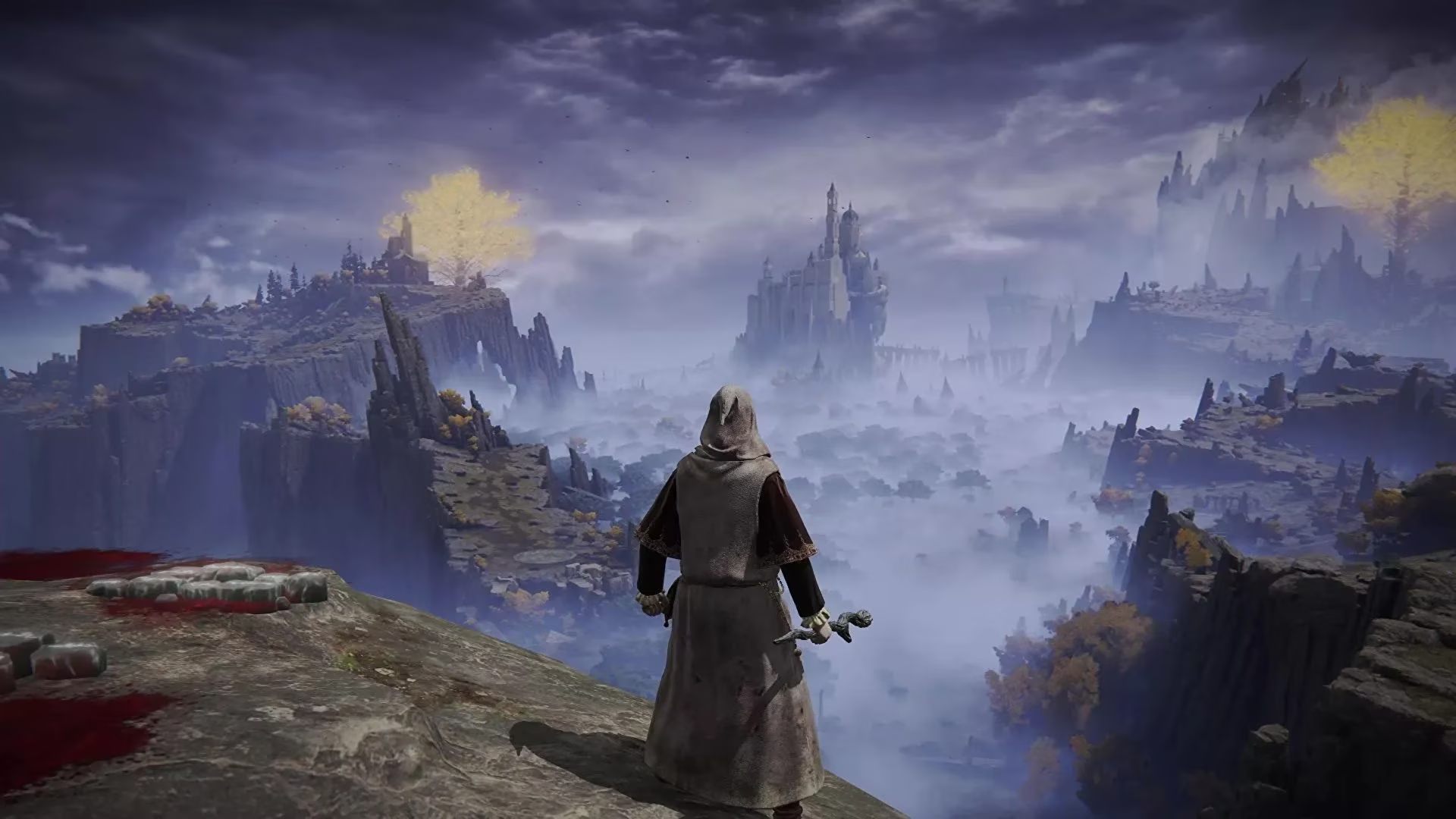
No checklist barked at me. No glowing trail urged me toward “content.” I was suddenly free to wander west because the coastline caught my eye—not because a developer decided that’s where the next story beat had to be. That moment shifted everything. I wasn’t completing a scripted tour; I was forging my own journey, and the blank map was the canvas.
Before this, I’d routinely ghost away from Ubisoft-style open worlds. You know the ones: maps so plastered with icons that they look like a hedgehog sneezed over the parchment. I’d spend two hours clearing bandit camps and collecting feathers, then quit from sheer mental fatigue. Zelda: Breath of the Wild had already taught me that less is more—its “just look and go” philosophy remains my gold standard—but Elden Ring pushed that idea into a punishing, dark fantasy landscape and made it sing.
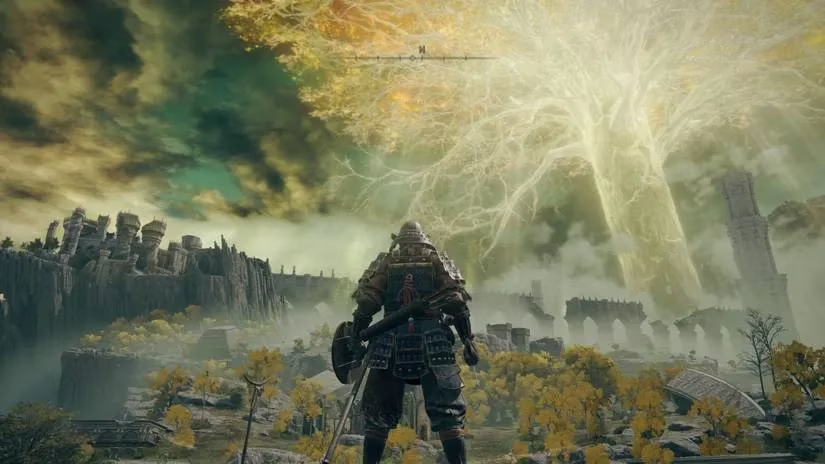
I trotted into hidden caves not because a marker led me there, but because I spotted a suspiciously placed statue. I stumbled upon an elevator that dropped me into an entire underground star-lit city, and absolutely no one told me it existed. I fought a sleeping dragon at level 3, died twenty times, and loved every second because the decision was mine. The absence of a quest log didn’t feel like a missing feature; it felt like a deliberate invitation to pay attention, to remember, to care.
Of course, I’ve missed tons of stuff. Friends mention secret bosses I’ve never seen, and the internet is still unearthing niche interactions in 2026. But I don’t feel that old FOMO sting. The game is designed so that every blind run is a personal myth—your missed content isn’t a failure, it’s just a story you didn’t live this time. The community buzz around these differences has become one of the game’s lasting gifts, turning patio conversations into “wait, you found what?” festivals.
I’d be remiss if I didn’t acknowledge that not everyone shares my relief. After Elden Ring’s launch, accessibility advocates rightly pointed out that a blank map can be a barrier—cognitive load, visual impairments, or simply the mental energy required to hold a dozen vague NPC directions in your head. I completely understand why some players need waypoints or a quest journal. Optional toggles would have brought this glorious freedom to more people without diminishing my own experience. That conversation has shaped how many games approach map design today, and I’m grateful for it.
Now in 2026, with the Shadow of the Erdtree expansion behind us and a generation of soulslikes trying to capture the same lightning, Elden Ring’s philosophy still stands tall. The Lands Between prove that trust between player and developer can be more powerful than any arrow on a compass. I’ve since finished the game twice, each route wildly different, and I still discover new corners when I jump back in for an evening. The freedom to wander, to fail, and to stumble upon magic without a manual—that’s the real platinum trophy.
So I’ll keep my guilt locked in a chest at the Roundtable Hold. My map will stay gloriously uncluttered, my Tarnished will continue to stumble toward whatever catches her eye, and I’ll treasure every self-made story that comes from it.
Comments