 EldenRingInsight
Imagine spending over a hundred hours in a digital world, only to consistently feel like a mere speck in its grand design. That's the paradoxical magic of Elden Ring, a game that has captivated players since its release and continues to dominate conversations even years later, especially with the looming shadow of its expansion. The player's journey through the Lands Between isn't just about defeating demigods; it's a constant, humbling lesson in scale. While other games have tried to evoke awe through sheer size, FromSoftware's masterpiece achieves something far more profound. It doesn't just show you giants; it makes you feel your own smallness in every crumbling ruin, every distant horizon, and every earth-shaking footstep of a boss. Isn't it fascinating how a game can make you feel so insignificant and yet so utterly compelled to explore every inch of its terrifying beauty?
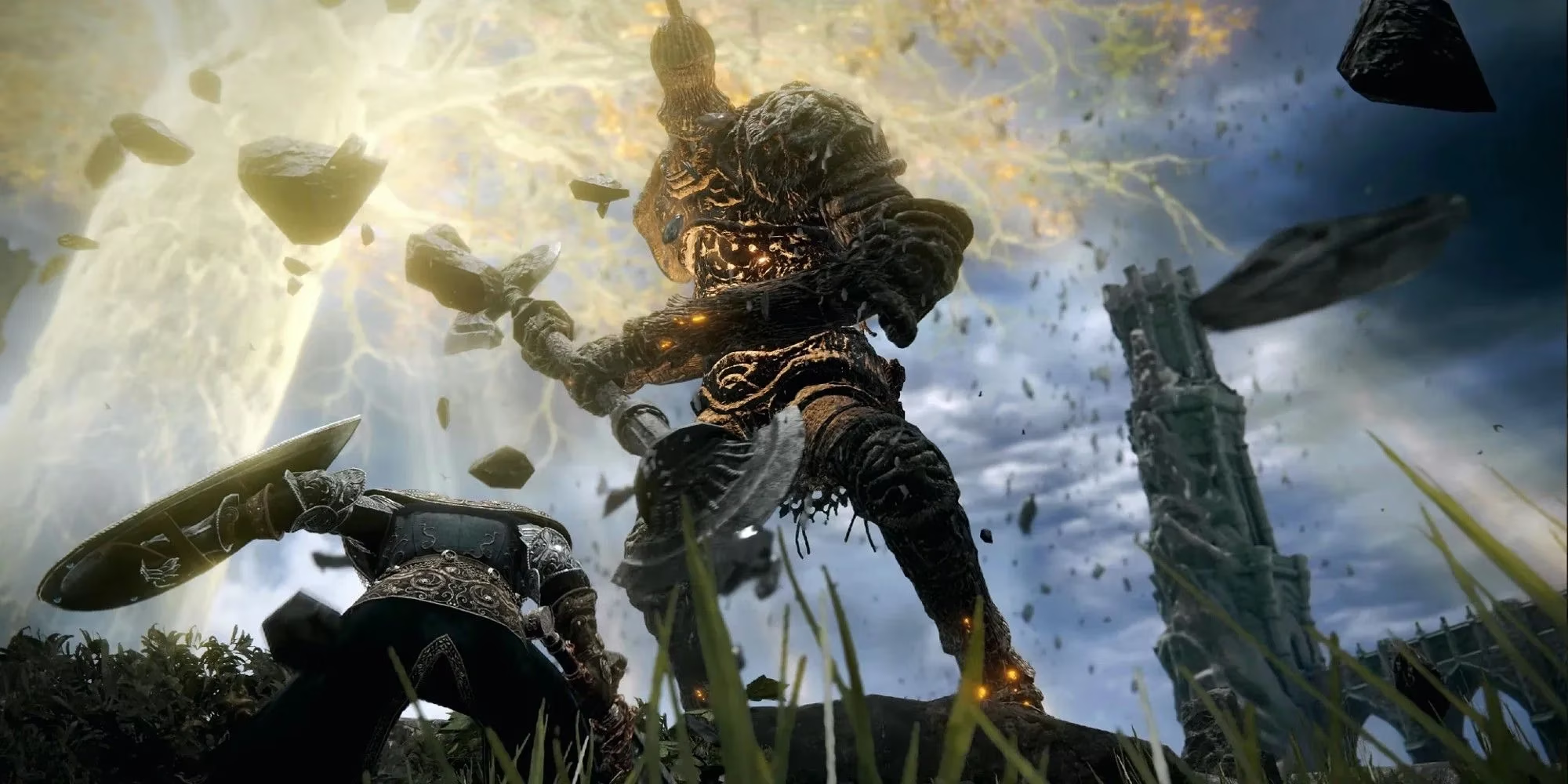
The Illusion of Grandeur vs. The Reality of Vastness
Think about the giants we've faced in other games. The World Serpent in God of War Ragnarök is a spectacle, a creature of literal mythic proportions. The colossi in Shadow of the Colossus are monumental puzzles to be scaled. The Kaiju battles in Final Fantasy 16 are cinematic fireworks displays. Yet, for all their impressive stature, these encounters often feel like set pieces—moments of grandeur within a structured narrative. Elden Ring, however, operates differently. Its sense of scale isn't an occasional feature; it's the very fabric of the world. From the moment you step into the Limgrave, the golden boughs of the Erdtree dominate the skybox, a constant, unreachable reminder of your place in this order. The game's world-building, sound design, and environmental storytelling all conspire to create a pervasive feeling of smallness. It's not just about fighting big things; it's about existing in a place that was ancient and dying long before you arrived, and will likely persist long after you're gone.
A World That Breathes History, Not Just Hostility
What truly sets Elden Ring apart is how its vastness is layered with meaning. The world rarely feels like a video game level designed for a player. Instead, it feels like a genuine, ruined ecosystem with its own logic and deep history. This is achieved through a symphony of interconnected elements:
-
Verticality and Secrets: The map is a masterpiece of layered exploration. You're not just moving across a plane; you're delving into bottomless wells, scaling divine towers that pierce the clouds, and discovering entire concealed civilizations beneath the surface.
-
Architectural Storytelling: The castles, manors, and ruins are not just combat arenas. Their intricate, ponderous architecture—think of the giant chain bridges over bottomless chasms—tells a story of a fallen civilization that operated on a scale incomprehensible to the Tarnished.
-
Passive Giants: The scale isn't only communicated through enemies. The Walking Mausoleums, those stone turtles with cathedrals on their backs, are passive behemoths whose footsteps and tolling bells echo across regions. They are part of the landscape, moving monuments to a forgotten age.
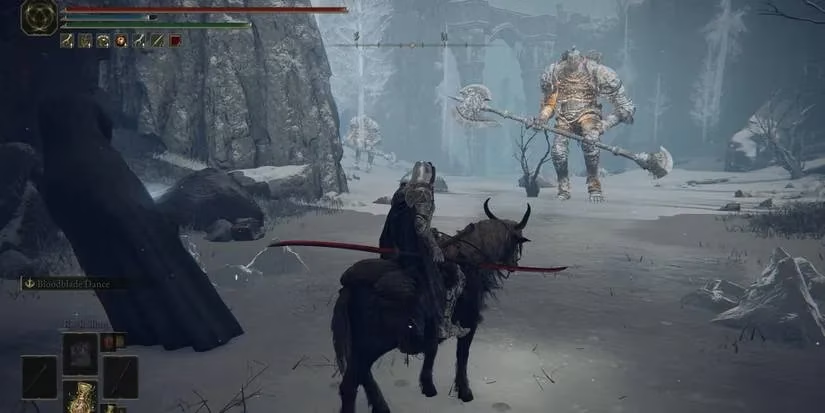
The Personal Odyssey Within the Epic
The player's personal journey mirrors this theme of scale. You begin as someone barely more capable than a hobbit, easily crushed by lowly soldiers and wild dogs. Your growth to a demigod-slayer feels earned precisely because the world has spent dozens of hours impressing its magnitude upon you. Memorable encounters are burned into memory not just for their difficulty, but for their sheer overwhelming presence:
| Encounter | Feeling of Smallness Evoked |
|---|---|
| Fire-Breathing Golems at a Divine Tower | Being attacked by siege weapons personified, with arrows the size of trucks. |
| First sight of Leyndell, Royal Capital | Discovering a multi-leveled, desolate city shrouded by the petrified corpse of a giant dragon. |
| Battling a Demigod | Learning attack patterns from between the ankles of a skyscraper-sized foe. |
This odyssey is so grand in scope that it draws a natural comparison to the Lord of the Rings trilogy. The key difference? You experience the entire epic, from humble beginnings to world-shaking conclusions, from a single, grounded perspective. You are both the insignificant hobbit and the growing power that must confront the darkness, often completely alone. The tangled, obscure narrative and elusive NPC questlines only enhance this feeling; you are a small part of a vast, ongoing history you must painstakingly piece together.
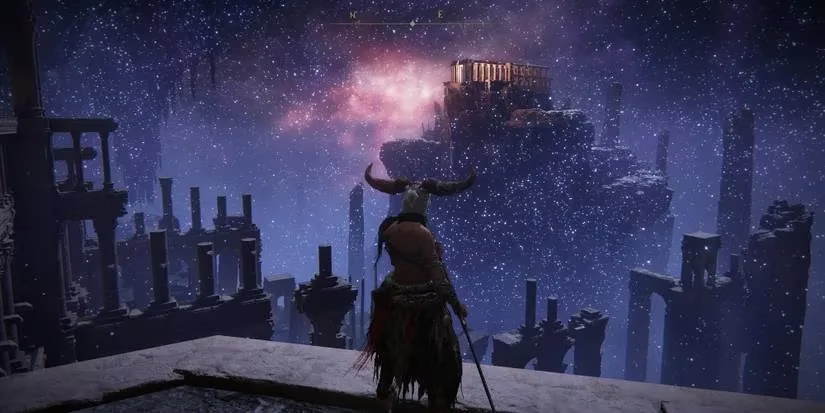
The Legacy and the Looming Shadow
By 2026, Elden Ring's status as one of the greatest games ever created is not just fan hyperbole; it's a critical and cultural consensus. Its success was so monumental that it seemingly gave FromSoftware the confidence and mandate to take their time with the expansion, Shadow of the Erdtree. The base game's achievement was in crafting a world that felt boundless and alive with a scale that dwarfed the player. The tantalizing promise of the expansion is the chance to feel that awe all over again, to explore new lands that will inevitably make us feel even smaller. The anticipation isn't just for more content; it's for another masterclass in environmental storytelling and sublime, humbling scale. Will we discover valleys deeper than Siofra River? Might we encounter beings that make the current Demigods seem manageable? The prospect is as thrilling as it is daunting.
In the end, Elden Ring's genius lies in this beautiful contradiction. It presents a brutal, challenging world that punishes the player relentlessly, yet it makes that world so breathtakingly vast, so rich with mystery and melancholy history, that you willingly accept your role as a small, persistent speck within it. You don't just fight to become the Elden Lord; you explore to understand your place in the cosmos. And as we all await the next chapter, one question remains: are we ready to feel even smaller?
Comments