 EldenRingInsight
Learning how to parry in Elden Ring is one of those skills that completely changes how the game feels. A clean parry deletes an enemy’s poise, forces them into that vulnerable stagger, and gives you a critical hit opening that can outdamage an entire combo by itself. In this guide, we’re breaking down the full system — timing, frame behavior, best tools, practice drills, boss matchups, and PvP choices — with the base game, Shadow of the Erdtree, and the 2026 meta all in mind.
How to Parry Elden Ring Attacks
Parrying in Elden Ring works on a pre-impact timing model, which is the part that trips most players up at first. You do not press parry when the attack hits you — you press L2 on PlayStation, LT on Xbox, or your mapped off-hand input on keyboard a little before contact. Hit it too early and you only get startup with no active parry frames. Hit it too late and you’re just eating the attack.
The ideal input usually lands in the last 15–20% of the enemy’s attack animation, right as the hitbox is about to go live. That’s the basic rule, but each parry tool shifts the feel a bit because startup frames and active frames are different from one option to another. Startup frames decide how early you need to commit. Active frames decide how forgiving the parry actually is.
That’s why the Buckler and Golden Parry feel much easier for most players, while standard medium-shield parries sit somewhere in the middle. Weapon-based parries, like an off-hand Caestus or even a Misericorde, are much tighter. They start quickly, sure, but the actual success window is smaller.

One thing worth clearing up immediately: Guard Counters are not parries. A guard counter happens when you block an attack and immediately press heavy attack. It’s strong, it deals great stance damage, and it’s absolutely useful — but it does not trigger the crouched stagger state that opens a riposte. A real parry fully negates the incoming strike and creates that critical-hit opportunity.
After you land the parry, the riposte window is pretty generous, but you still need to be in the right place. Walk or stay directly in front of the staggered target, then press light attack. If you’re off to the side or slightly behind them, the animation can fail or come out awkwardly, which is honestly one of the more annoying ways to waste a perfect parry.
Best Parry Tools in Elden Ring
Picking the right parry tool matters almost as much as your timing. Some options are way more forgiving, some give you extra range, and others are built for very specific matchups.
| Parry Tool | Type | Active Frames | Best Use Case |
|---|---|---|---|
| Buckler | Small Shield | High (most forgiving) | General PvE and learning |
| Golden Parry | Ash of War | Medium (with range) | Ranged threats, horseback enemies |
| Carian Retaliation | Ash of War | Medium | Anti-magic, spell absorption |
| Target Shield | Small Shield | Medium-High | Balanced PvE option |
| Caestus / Cestus | Fist Weapon | Low (tight window) | PvP speed parrying |
| Medium Shield Parry | Ash of War | Medium | Versatile mid-game option |
The Buckler is still the easiest recommendation if you’re learning how to parry in Elden Ring. Its active frames are the most forgiving in the game, so slightly mistimed inputs still have a decent chance to connect. You can buy it from Gatekeeper Gostoc in Stormveil Castle for 1,500 runes once he opens the castle path. Just keep in mind that its low stability makes it a poor panic-blocking shield. If you equip it, you’re basically committing to the parry game.
Golden Parry is one of the most practical upgrades once your timing starts to click. This Ash of War lets your shield project a golden parry effect outward, which means you can catch attacks from farther away than normal. That extra range is clutch against mounted enemies, aggressive gap-closers, and slower heavy-weapon users who swing from awkward spacing. It also scales with Faith, so Faith builds get even more value out of it thanks to the expanded hitbox and reach. You get it from a Crucible Knight near the Stormhill Evergaol in Limgrave.
Carian Retaliation fills a different role entirely. Instead of being just a standard deflect, it can absorb incoming spells and fire back a set of homing Glintblades at the caster. That alone makes it a serious anti-mage tool in both PvE and PvP. It still has a physical parry window for melee attacks, so it’s not one-dimensional, but its real highlight is punishing Intelligence-heavy enemies and sorcery users. You can find it on a corpse in the Three Sisters area of Liurnia.
Elden Ring Enemies You Can Parry
A huge part of learning parries is simply knowing what not to parry. A lot of the frustration around the mechanic comes from trying to parry attacks that were never meant to be parried in the first place.
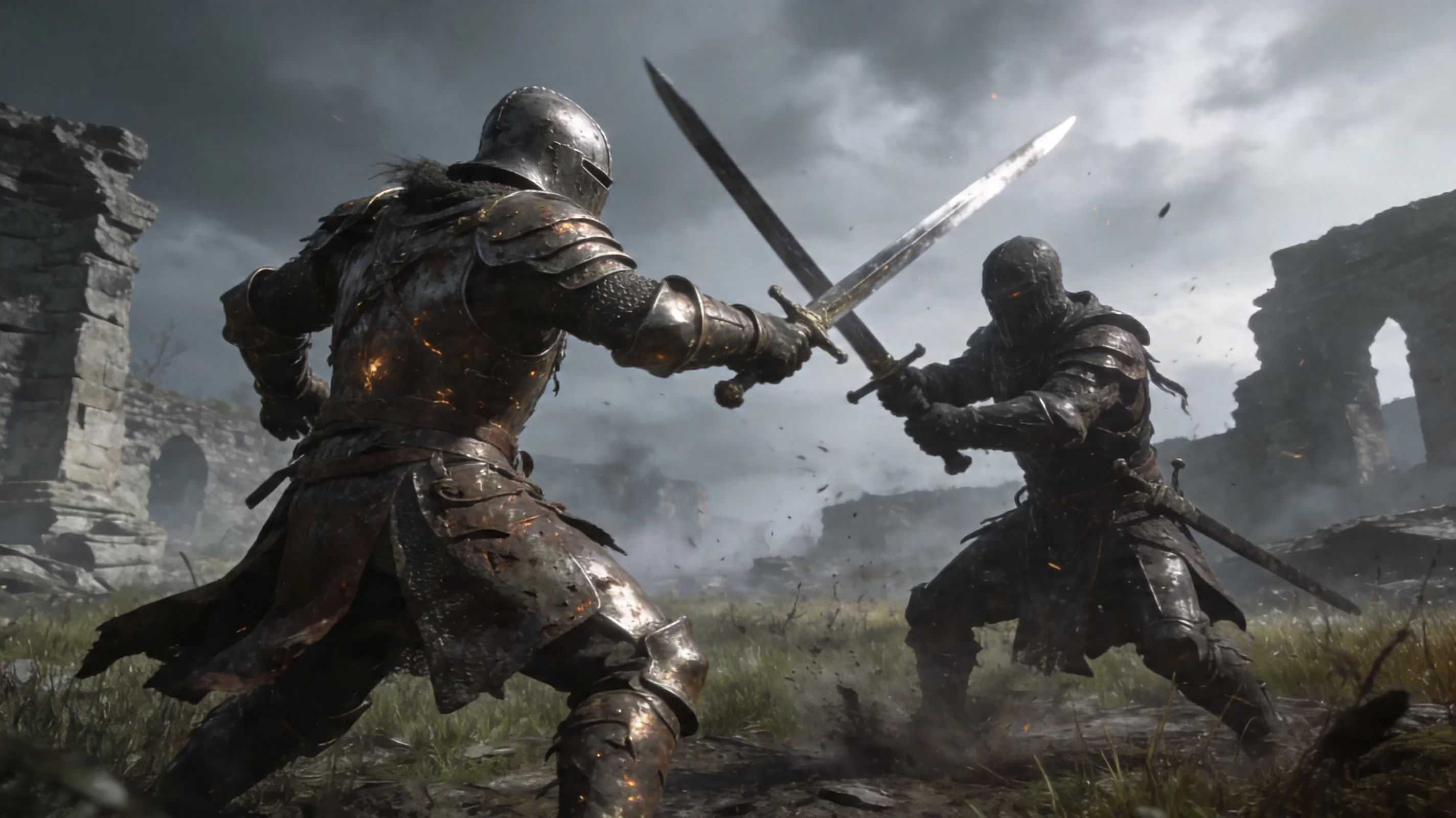
In general, humanoid enemies are your safest bet. Soldiers, knights, assassins, and NPC invaders are usually parryable, especially when they’re using standard weapon swings. Enemies like Crucible Knights, Redmane Knights, Black Knife Assassins, and most named invaders throughout the game respond well to parries. Even smaller enemies such as skeleton warriors, demi-humans, and many early Limgrave mobs can be parried, which is exactly why they make good practice targets.
On the other hand, grabs, large AoEs, and most attacks from oversized enemies are off the table. Dragons, giants, golems, and many large magical constructs simply do not care about your parry input. The same goes for a lot of giant slam attacks and explosive effects. Even when the enemy is humanoid, two-handed colossal-weapon swings from heavily armored bosses are often coded as unparryable.
Bosses are where things get more interesting. Margit the Fell Omen has several attacks you can reliably parry, especially his cane swings and dagger thrusts. Godrick the Grafted also has parryable melee attacks during Phase 1. Some players even build consistent parry strategies around Morgott, the Omen King, especially by reading his longer dagger strings. But for most major story bosses, parry opportunities are limited, and failed attempts can get punished hard.
The DLC adds a few wrinkles here. Shadow of the Erdtree includes several humanoid bosses and elite enemies — especially commanders and knight-style encounters in the Land of Shadow — with movesets that can be parried. The catch is that their animations are generally faster and their telegraphs are shorter than what you’re used to in the base game. So yes, the same rules apply, but the execution is noticeably stricter.
How to Practice Parry Timing Elden Ring
If you want reliable parries, random trial and error in boss fights is pretty much the worst way to learn. The players who parry consistently usually build that timing through repetition in controlled fights first.
The best early drill is still the Gatefront Ruins soldiers in Limgrave. Their attacks are slow, obvious, and repeatable. Most of them use simple one-handed sword swings with very readable windups, which makes them perfect for building your first bit of muscle memory. Spend 10 to 15 minutes there doing nothing but parry attempts. Don’t dodge out of habit. Let the attack come in and focus on the timing.
Once that feels comfortable, move up to the Crucible Knight near the Stormhill Evergaol. This is the midgame benchmark a lot of players use because the enemy is aggressive, varied, and precise. If you can consistently parry a Crucible Knight’s sword swings, overheads, and pressure strings, your timing is probably good enough for most PvE situations.
A couple of cues help a lot:
-
Audio cue: listen for the whoosh or whistle in the enemy’s windup just before impact
-
Visual cue: watch the hand or weapon reach the peak of the swing
-
Combined read: using both together is much more reliable than relying on only one
Input setup matters more than people think, too. On controller, parry should be a quick tap on L2/LT, not a held press. On keyboard, the default off-hand input can feel awkward depending on your setup, so remapping it is often worth doing. A lot of PC players get cleaner results by moving parry to a dedicated mouse button instead of reaching for a keyboard key during a split-second reaction window.
Elden Ring Parry Builds and Follow-Ups
Landing the parry is only half the payoff. If your build isn’t set up to capitalize on the riposte, you’re leaving a lot of damage on the table.
Light equip load is strongly recommended for a parry-focused setup. Staying under 30% equip load gives you the fastest roll and, just as importantly, helps with stamina efficiency across repeated parry attempts. If your stamina bar is constantly empty, your defensive options disappear fast. For most builds, aiming for around 25–30 Endurance is a solid baseline, with more if you’re using heavier gear or leaning on Golden Parry regularly.
The Dagger Talisman is about as close to mandatory as it gets for this playstyle. It boosts critical hit damage by 17%, which directly buffs your ripostes after successful parries. If you’re also running a bleed side setup, pairing it with Lord of Blood’s Exultation can push riposte damage into absurd territory. In the right matchup, one crit can chunk 30–50% of an enemy’s HP bar.
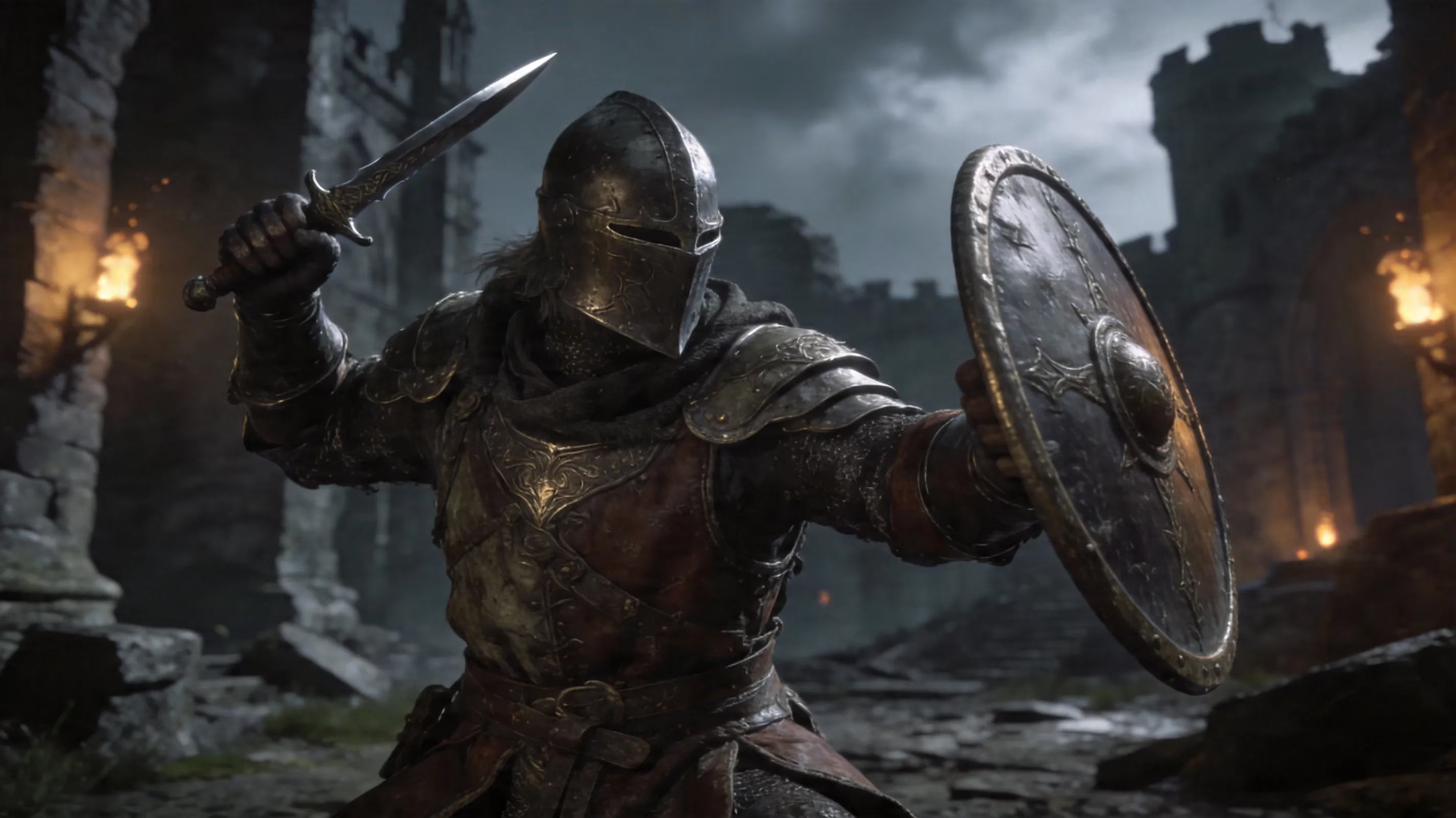
For the weapon itself, Misericorde is the clear standout. It has a 140 critical modifier, which is the highest in the game, while most standard weapons sit at 100. That gap is massive. A lot of players carry Misericorde specifically for ripostes, keeping it in the right hand while using a small shield or fist weapon in the left for parries. It’s a specialized setup, but the damage difference is more than enough to justify it.
PvE and PvP also ask for slightly different parry mindsets:
-
PvE: enemy patterns are fixed, so you can learn exact timings and punish repeatably
-
PvP: opponents will delay, feint, and bait your parry attempts on purpose
-
PvP tools: tighter options like Caestus or Buckler are common for faster reactions
-
Best PvP approach: don’t fish for every swing; look for obvious heavy attacks or predictable panic patterns
In other words, PvE rewards memorization. PvP rewards restraint.
Elden Ring Parry FAQ
Why does parry feel inconsistent?
Usually because your timing is drifting between enemy types. A parry that works on a slow soldier will come out too early against a faster knight, and that mismatch can make the whole mechanic feel random when it really isn’t. In PvP, latency makes things even messier. A parry that feels perfect offline can still miss online because of rollback and connection delay.
Can you parry Malenia?
Yes, but this is one of those “technically yes, practically very demanding” situations. Several of her normal sword attacks in Phase 1 are parryable if your timing is exact. The first flurry of Waterfowl Dance has also been parried by high-level players, though the execution is brutal. Her Phase 2 bloom dive attacks are not something you should expect to parry reliably. For most players, dodging is still the better answer against Malenia, and honestly, that’s fine.
What is the best shield for beginners?
The Buckler, easily. It has the most forgiving active frame window in the game. If you don’t have access to it yet, the Target Shield is a strong early alternative and can be found in Limgrave.
When does dodging beat parrying?
Dodging wins against grabs, explosive attacks, wide AoEs, and a lot of horseback attacks with diagonal or overhead slams. It’s also the safer choice when a failed parry would leave you out of stamina and stuck in a bad position. The best way to think about it is simple: parrying and dodging are not competing systems. They’re complementary tools, and strong players switch between them based on the attack in front of them.
Conclusion
If you want the smoothest starting route, go with the Buckler, keep yourself at light equip load, and drill against the Gatefront soldiers until the timing starts to feel natural. After that, test yourself on the Crucible Knight, then branch into Golden Parry for extra range or Carian Retaliation for magic-heavy matchups. Add a Misericorde and the Dagger Talisman, and every successful parry suddenly turns into a huge punish.
That’s really the core of how to parry in Elden Ring: read the wind-up, commit just before impact, and cash out with the riposte. It takes practice, no question, but once it clicks, combat stops feeling like pure survival and starts feeling way more controlled. Go land that riposte.
Comments